

How Does a Nuclear Power Plant Work? A Comprehensive Guide.
In this guide, we will examine what happens behind the massive concrete walls of a nuclear power plant, from the fission of the atom to the process of electricity reaching your outlet, through the eyes of a commissioning engineer.
Nuclear energy is often seen as a complex and intimidating "black box." However, at its core, a nuclear power plant is a highly advanced and ultra-safe water heater that uses the energy of the atom instead of coal to boil water.
1. Basic Principle: Fission (Splitting of the Atom)
Everything starts in the nucleus of the atom. In nuclear power plants, the fuel used is typically the Uranium-235 (235U) isotope. When a neutron strikes a heavy Uranium nucleus, the nucleus becomes unstable and splits. This event is called fission.
When fission occurs, three things are released:
Heat Energy: A tremendous amount of kinetic energy is converted into heat.
New Neutrons: These strike other atoms, initiating a "chain reaction."
Fission Products: Smaller atomic fragments that are radioactive.
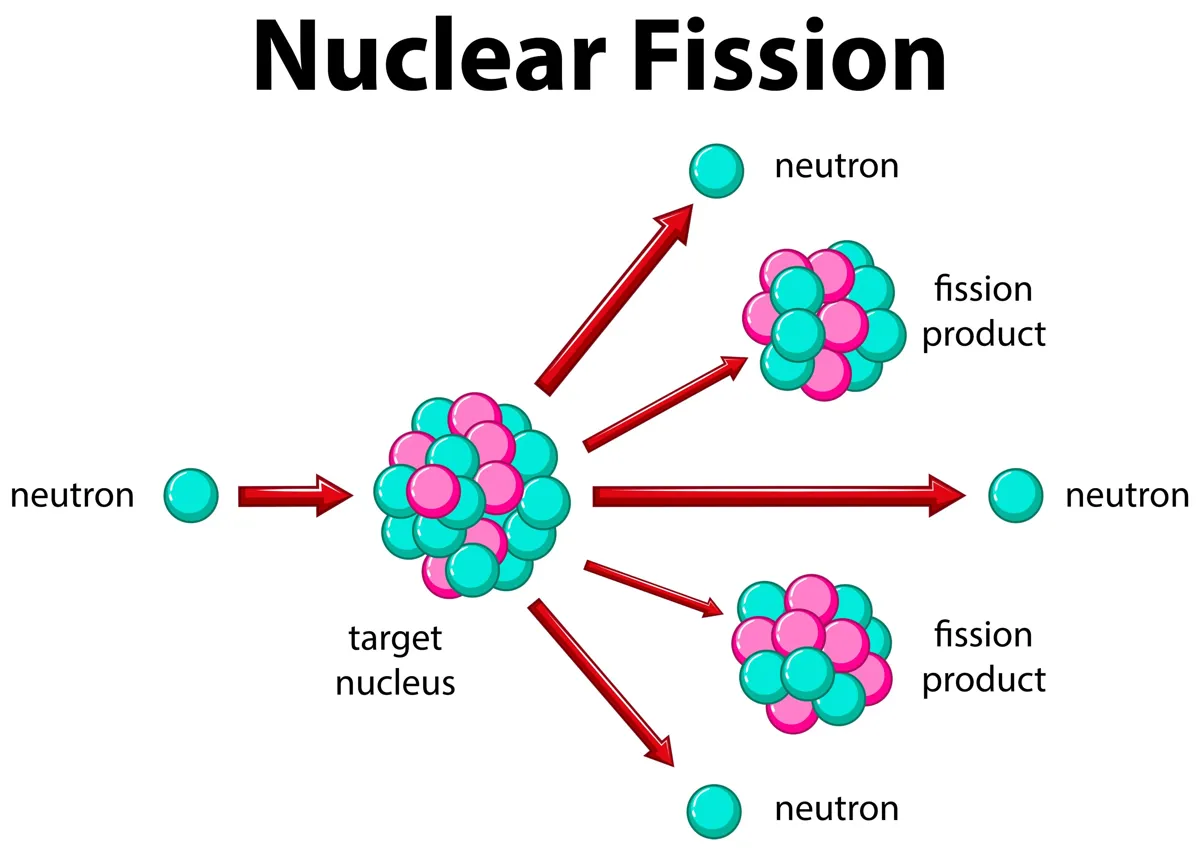
What makes this reaction an engineering marvel is keeping it under control. The rate of the reaction is adjusted with the help of control rods (neutron-absorbing materials like boron or cadmium). If you fully insert the control rods, the heartbeat stops; that is, the reactor "trips."
2. The Heart of the Nuclear Power Plant: Reactor Types
When you work in the field, you see that each plant has its own character. Let's examine the three main types of reactors most commonly used in the world:
A. Pressurized Water Reactor (PWR)
About 65% of the reactors in the world are of this type. There are two main loops:
Primary Loop: Water is heated in the reactor core but is kept under very high pressure, so it does not boil.
Secondary Loop: This heated water passes through a "Steam Generator," heating water in another line and converting it to steam.
Advantage: Radioactive water never goes to the turbine building.
B. Boiling Water Reactor (BWR)
Unlike the PWR, there is only a single loop here. Water is boiled directly in the reactor core, and the resulting steam is sent directly to the turbine. Its design is simpler, but the turbine building also requires radiation protection.
C. Heavy Water Reactor (PHWR - CANDU)
In these reactors, designed in Canada, "Heavy Water" ($D_2O$) is used instead of regular water to slow down neutrons. Its biggest advantage is that fuel can be replenished while the plant is online.
3. Step-by-Step Operating Process
As a commissioning engineer, I can summarize the steps during the initial operation (first criticality) phase of a unit as follows:
Step 1: Heat Generation
Neutrons begin to fly between the fuel rods in the reactor core. Heat is transferred from the fuel to the coolant (water). Pressure control is vital at this stage; if the pressure drops, the water suddenly evaporates and loses its cooling ability.
Step 2: Steam Formation (Heat Exchange)
In PWR systems, water coming from the reactor at around 320°C passes through thousands of capillary tubes in the steam generator. It heats the outside water. In engineering terms, this is the "Secondary Side" feed.
Step 3: Turbine Rotation
The resulting high-pressure dry steam strikes the massive turbine blades. The turbine begins to spin at 1500 or 3000 RPM (depending on the grid frequency). This is the moment when the most noise and vibration occurs in the field; you can feel a huge building vibrating.
Step 4: Electricity Generation (Generator)
The turbine shaft is connected to the generator. As the massive magnets inside the generator rotate, a change in the magnetic field creates an electric current (flow of electrons) in the stator windings.
Step 5: Condenser and Cooling Towers
The steam that has completed its job must be cooled and converted back into water. For this, sea, river water, or massive cooling towers are used. The famous white smoke that rises from nuclear plants is actually just pure water vapor; it is not radioactive.
4. Safety Systems: Defense in Depth
The first rule of a nuclear engineer is: Safety First. Nuclear power plants are built with the philosophy of "Defense in Depth."
Fuel Matrix: Uranium itself is a ceramic structure, highly resistant to melting.
Zirconium Cladding: The metal tubes that hold the fuel are the first physical barrier.
Reactor Pressure Vessel: Typically made of steel, 20-25 cm thick.
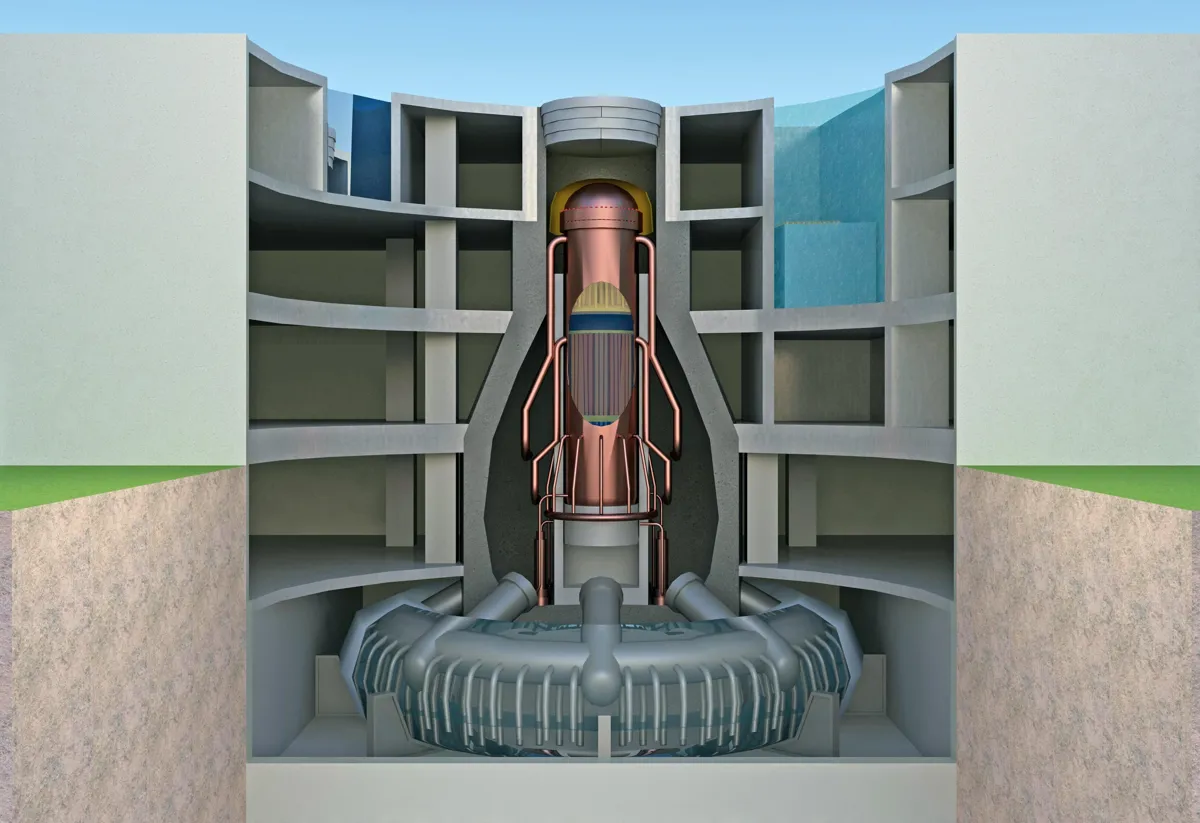
Containment: A thick, airtight structure made of concrete and steel that will not collapse even if hit by an airplane.
5. Notes from the Commissioning Engineer's Notebook
In the field, the "Cold Hydro" and "Hot Functional" phases are the most critical periods. We bring systems to operating temperature before loading fuel.
Leak Tests: Thousands of valves and flanges are checked one by one.
Interlocks: We simulate thousands of "If A, then stop B" scenarios.
Margin of Error: In the nuclear industry, there is no room for the word "maybe." Everything is based on procedures and data.
6. Global Nuclear Energy Statistics (2026 Data)
Globally, nuclear energy continues to play a critical role in providing low-carbon baseload power.
Global Nuclear Energy Statistics (2026)
Category | Value | Description |
|---|---|---|
Number of Active Nuclear Reactors | Active reactors generating electricity worldwide | |
Total Nuclear Installed Capacity | ~396 GW | Global total nuclear electricity generation capacity |
Reactors Under Construction | 60+ | New reactors under construction |
Planned Reactors | 100+ | Officially planned nuclear projects |
Share of Nuclear in Global Electricity Generation | %9 – %10 | Share in global electricity generation |
Country with Most Reactors | Approximately 93 active reactors | |
Fastest Growing Nuclear Program | Country building the most new reactors | |
Largest Nuclear Installed Capacity | USA (~95 GW) | Highest capacity worldwide |
Europe's Largest Nuclear Producer | About 65% of its electricity is nuclear | |
Average Reactor Age | ~31 years | Average reactor age worldwide |
Number of SMR Projects | 80+ | Small Modular Reactor development projects |
Annual CO₂ Emission Avoided | ~2 billion tons | Thanks to the use of nuclear instead of fossil fuels |
Note: As of 2026, SMR (Small Modular Reactors) technology has begun to replace traditional massive plants and provide energy directly to industrial areas.
7. Conclusion: Why is Nuclear Energy Important?
While coal plants emit millions of tons of CO2, nuclear plants produce almost zero emissions during operation. They provide continuous power 24/7 (unlike solar and wind, they are not dependent on clouds or wind). Yes, waste management is a challenge; however, modern technology and deep geological storage methods have technically solved this issue.
Related Articles

Global Renewable Energy Statistics 2026: Wind, Solar, and Hydropower Data

Hydroelectric Energy: How Do Dams Generate Electricity?

What is a Combined Cycle Power Plant? CCGT Technology and Operating Principle

Countries with the Most Power Plants: Global Energy Infrastructure Ranking (2026)
